Skin pigmentation, commonly known as hyperpigmentation, is a condition where dark patches appear on the skin, creating an uneven skin tone. This is a common concern for my clients and something many are looking to address.
Fortunately, today’s skincare products and facial treatments offer ways to improve the appearance of hyperpigmentation and help prevent future skin damage.
What is hyperpigmentation?
We have all have a substance called melanin in our bodies. This is what gives our skin, hair and eyes their natural pigment, or colouring.
For a long time it was thought that hyperpigmentation happened because the body was producing too much melanin. But a study published in 2017 showed that isn’t always the case, especially in midlife skin.
In healthy skin, melanin is produced, then moves up through the skin layers and eventually sheds, keeping the skin tone even.
In your 20s, this process takes around 28 days, but it slows as you get older. By the time you reach your 50s, it can take 40-60 days. As the process slows down, melanin gets trapped in the deeper layers of the skin where it can’t shed as it’s supposed to. This results in uneven dark patches on the surface of the skin.
What does hyperpigmentation look like?
Hyperpigmentation can take a number of forms.
For example:
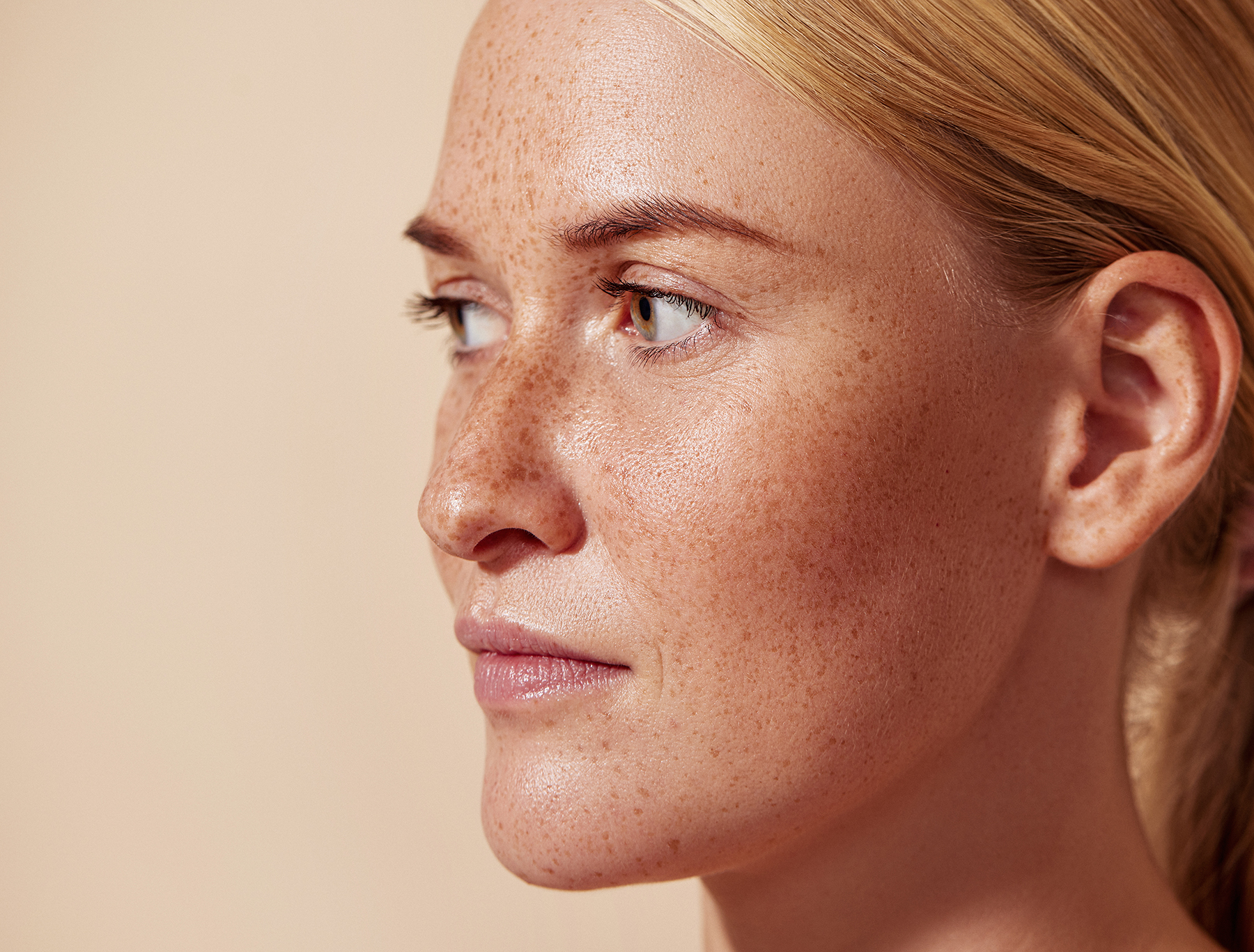
- Freckles and sun spots
- Flat brown spots caused by cumulative sun exposure
- Melasma: flat brown or greyish patches, mainly on the face
- Dark marks left behind by spots, cuts or irritation.
What causes hyperpigmentation on the face?
Hyperpigmentation can have a number of contributing factors, including:
- UV rays from sun exposure
- Hormonal changes in pregnancy or menopause
- Post-inflammatory marks left by acne, eczema or irritation
- Natural skin ageing
- Skin trauma, such as skin picking or excessive exfoliation
- A genetic predisposition.
Identifying the possible contributing factors can help to determine the best skincare routine for you.
Why skincare products for hyperpigmentation may not have worked
If skincare products that claim to reduce the appearance of dark spots haven’t worked for you, it could be because it was the wrong approach for your skin.
Some skincare brightening products still work on the basis that hyperpigmentation is due to an over-production of melanin. They’re formulated to block or slow down melanin production, but they don’t do anything to target pigment trapped under the skin. This pigment can be trapped so deep in the skin tissue that topical products can’t even reach it.
Ladies who’ve been desperate to remove their dark patches have used harsh products, scrubbed at their skin, or over-exfoliated to the point where it’s caused irritation. But this only makes the problem worse, because your skin sees irritation as a threat and produces even more melanin to protect itself.
What you really need for hyperpigmentation
What works best for hyperpigmentation is a method that combines consistent treatments and prevention. This will help to fade the existing dark patches and prevent new melanin from building up under the skin, where it can’t shed naturally.
Home skincare can help, but it might not be enough to make a difference on its own. This is where professional treatments come in.
Professional treatments for hyperpigmentation
Professional salon treatments can help to address hyperpigmentation. But having a personalised treatment plan and home skincare routine that are customised for your skin will make the biggest difference.
This is what I offer as part of The Hayley Kooner Method.
Here are some of the professional treatments I use to help fade hyperpigmentation and prevent further issues.
Chemical peels for hyperpigmentation
Chemical peels can be an effective treatment for discoloured skin and scarring.
The chemicals are a lot more natural than most people imagine. They’re mainly created using naturally occurring organic acids from fruit and plants.
I’ll apply a chemical solution to your face, which gently removes the top layers of skin. When the skin grows back, it will be smoother and any dark patches will appear faded.
How many chemical peels will I need for hyperpigmentation?
For hyperpigmentation, most people need multiple treatments. The treatments are spaced several weeks apart so your skin has time to recover between them.
The exact number of peels you’ll need will vary according to your skin type, the condition of your skin, and how well it responds to the treatment.
As a highly qualified therapist, I can offer chemical peels that go deeper, for more dramatic results, but will only offer this when it’s safe and advisable to do so.
Microneedling for hyperpigmentation
Microneedling is a technique that uses tiny needles to break the skin and stimulate the skin’s natural healing process.
It can be used alongside other treatments, like chemical peels for even better results.
Red light therapy for hyperpigmentation
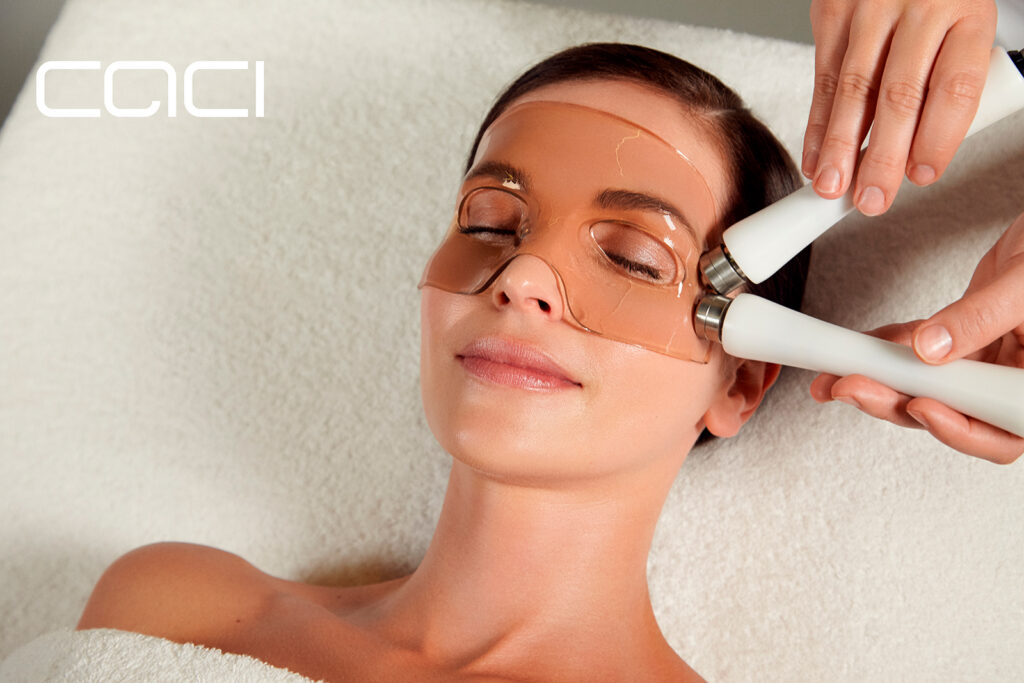
Red light therapy, also called low-level light therapy (LLLT), exposes the skin to visible and near-infra-red light. This triggers your skin to restore its balance and naturally rebuild its tone and brightness.
It does this by:
- Renewing cells
- Reducing inflammation
- Regulating melanin production
- Boosting collagen and circulation.
Microdermabrasion for hyperpigmentation
Microdermabrasion is another skin resurfacing treatment. It uses gentle exfoliation to buff away dead skin cells and remove the top layer of skin. This triggers the growth of new cells and the production of collagen to improve your skin’s texture and tone.
Improving hyperpigmentation at home
In addition to professional treatments, there are things you can do for your hyperpigmentation at home.
Use sunscreen daily
The NHS and Skin Cancer Foundation both recommend and SPF of at least 30 for daily exposure, like walking outside and driving.
Choose products labelled ‘broad spectrum’. This means they protect against UVA rays, which cause ageing and deep skin damage; and UVB rays, which cause burns.
If you’re outside for a prolonged period, you should reapply your sunscreen every two hours.
Avoid causing trauma to your skin
Things like picking, scratching, scrubbing and over-exfoliating can cause trauma to the skin, which can make hyperpigmentation worse.
Support your skin barrier
You can support your skin barrier by:
- Introducing active ingredients gradually
- Avoiding harsh products that strip your skin
- Making sure your skin is properly hydrated.
Allow time to see the results
Visible improvements will be gradual rather than instant. Try taking photographs of your skin at regular intervals so you can compare them and see the changes over time.
How a bespoke facialist can help
I’m Hayley, a beauty therapist, aesthetic practitioner and bespoke facialist.
If you’re struggling with hyperpigmentation, I’d love to help.
I’ve developed a unique approach that can help with hyperpigmentation and a variety of other conditions affecting midlife skin.
It’s called The Hayley Kooner Method and it uses a combination of professional facial treatments, home skincare products and lifestyle recommendations. All tailored specifically for your skin and your goals to give you noticeable results.
Because everyone’s skin is different and needs a personalised approach.
You can find out more about The Hayley Kooner Method on my dedicated page.
Or contact me and arrange a call to discuss your skin today.
Explore topics